GLP-1 Under Fire: Breakthrough or Backlash?

The GLP-1 Backlash: Are We Missing the Bigger Picre?
Recent headlines frame GLP-1 medications as controversial, dangerous, or part of a legal “firestorm.” Lawsuits related to labeling and side-effect disclosures are ongoing. But when you step back and examine the broader scientific record, the picture becomes far more nuanced.
GLP-1 receptor agonists are not new. The first medication in this class, Byetta (exenatide), was approved in 2005. The underlying hormone pathway has been studied since the 1990s. That represents nearly two decades of clinical research and real-world use.
If GLP-1 therapies were inherently catastrophic, widespread safety alarm would likely have emerged long before 2023.
What changed recently was not the biology — it was public attention, particularly after approvals of Ozempic, Wegovy, and Mounjaro for broader metabolic use.
GLP-1 Medications Are Peptides — Working With Biology
GLP-1 receptor agonists are peptide-based therapies. A peptide is simply a short chain of amino acids — the same biological building blocks your body uses to create hormones and signaling molecules.
Your body already produces GLP-1 naturally in the gut. It plays a key role in:
• Stimulating insulin release
• Regulating blood sugar
• Slowing gastric emptying
• Signaling fullness to the brain
GLP-1 medications are designed to mimic or enhance this naturally occurring hormone — particularly in individuals whose metabolic signaling is impaired.
This is not introducing a foreign system into the body.
It is supporting a pathway that already exists.
GLP-1 is only one of many peptide pathways that regulate metabolism, inflammation, appetite, and hormonal balance. Understanding those pathways is central to understanding why these therapies can be effective

Diabetes Control and Cardiovascular Protection
GLP-1 medications were originally developed for Type 2 diabetes. They improve glucose regulation, enhance insulin response, and reduce hyperglycemia.
The SUSTAIN-6 trial, published in the New England Journal of Medicine, demonstrated that semaglutide significantly reduced cardiovascular events in patients with Type 2 diabetes.¹
Similarly, the REWIND trial, published in The Lancet, showed that dulaglutide (Trulicity) reduced major adverse cardiovascular events — even in patients without prior cardiovascular disease.²
These are not cosmetic outcomes.
They are survival outcomes.
For patients at risk of heart attack, stroke, and diabetic complications, these findings are clinically significant.
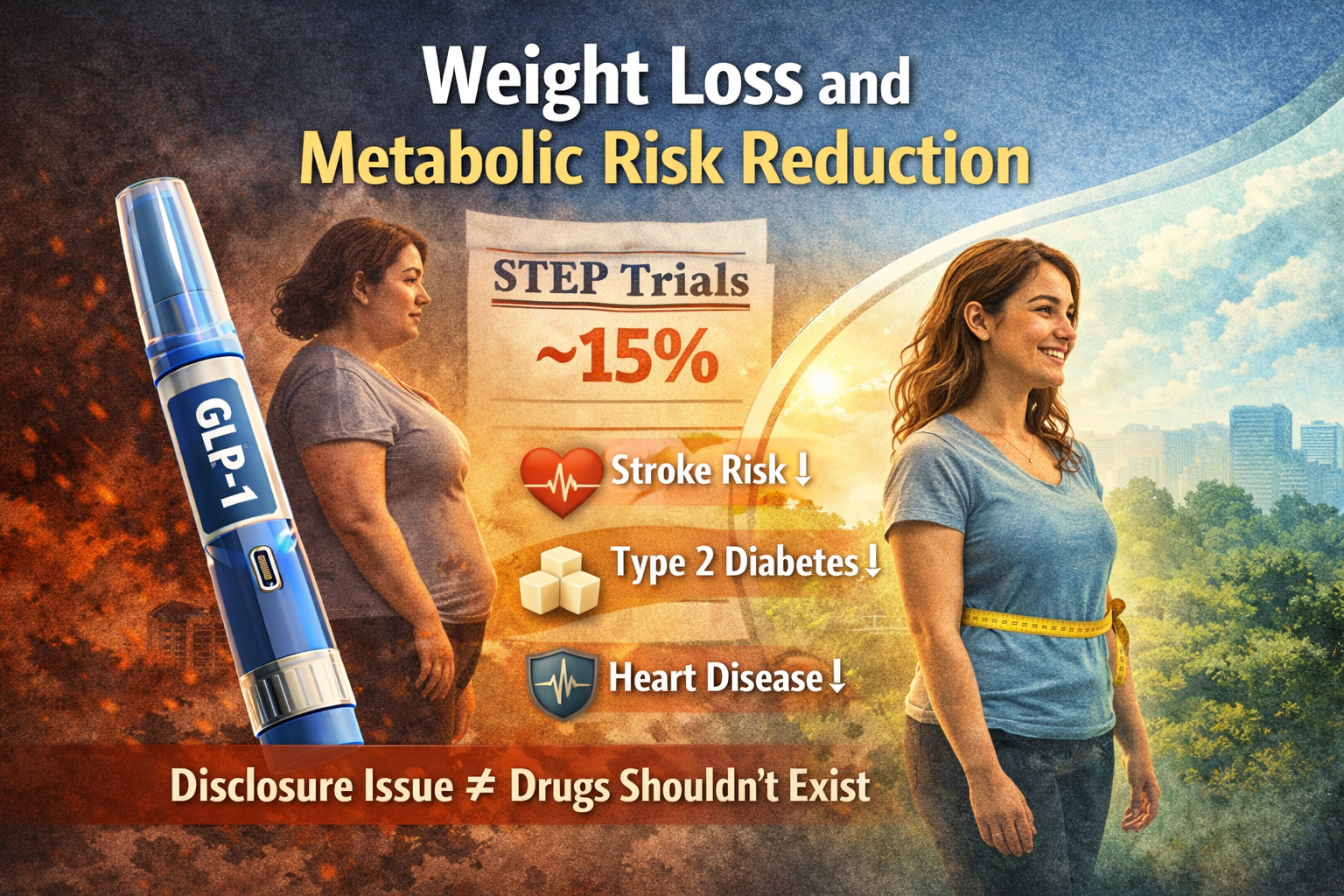
Weight Loss and Metabolic Risk Reduction
The STEP trials, also published in the New England Journal of Medicine, showed an average ~15% body-weight reduction in adults with obesity treated with semaglutide.³
This magnitude of weight loss is associated with:
• Lower risk of Type 2 diabetes progression
• Improved lipid profiles
• Reduced cardiovascular strain
• Improved metabolic markers
For patients with metabolic syndrome, obesity, or insulin resistance, this represents disease modification — not vanity treatment.
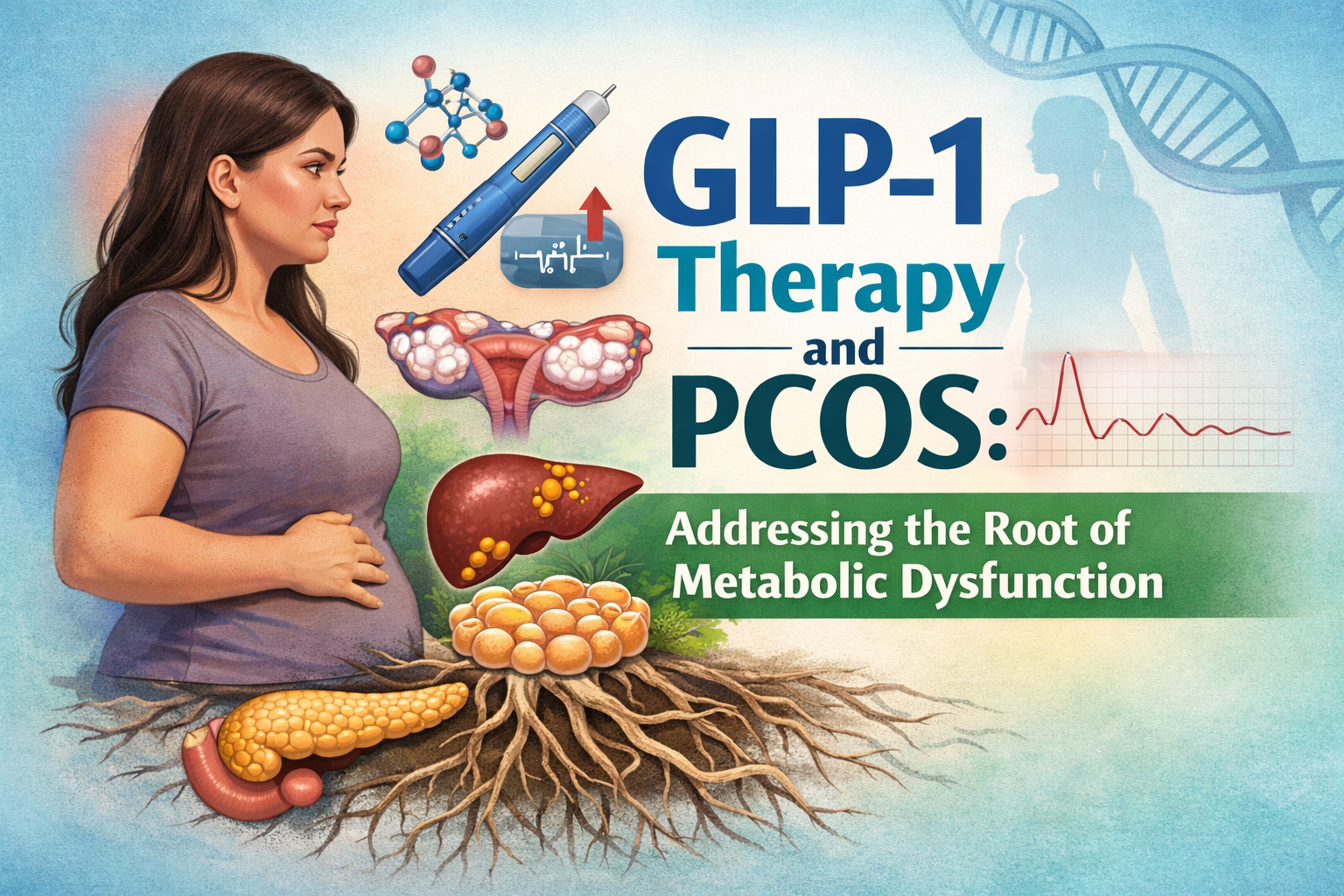
GLP-1 Therapy and PCOS: Addressing the Root of Metabolic Dysfunction
Merging research suggests GLP-1 receptor agonists may offer meaningful benefits for women with polycystic ovary syndrome (PCOS) by targeting one of the condition’s core drivers: insulin resistance.Women with PCOS experience insulin resistance at significantly higher rates than the general population — even when body weight is within normal range. This metabolic dysfunction contributes to hyperinsulinemia, elevated androgen production, irregular ovulation, weight dysregulation, and chronic inflammation
Because of this, traditional calorie-restriction approaches often fail. The issue is not simply caloric intake — it is impaired metabolic signaling.
A study published in the Journal of Clinical Endocrinology & Metabolism found that liraglutide (a GLP-1 receptor agonist) improved endocrine and metabolic parameters in women with PCOS.⁴ Clinical findings included improvements in:
• Insulin sensitivity
• Body weight and adiposity
• Androgen levels
• Menstrual regularity
By enhancing insulin signaling and reducing hyperinsulinemia, GLP-1
therapies address biological mechanisms driving many PCOS symptoms —
rather than merely managing surface manifestations.
📚 Study Citation (AMA Format)
Jensterle M, Kravos NA, Pfeifer M, Kocjan T, Janez A.
A 12-week treatment with the GLP-1 receptor agonist liraglutide improves
endocrine and metabolic parameters in obese women with polycystic ovary
syndrome.
J Clin Endocrinol Metab. 2015;100(3):1110–1118.
doi:10.1210/jc.2014-3240
What These Studies Found
In women with PCOS, GLP-1 receptor agonists were associated with:
-
Improved insulin sensitivity
-
Significant weight reduction
-
Reduced waist circumference
-
Improved androgen levels
-
Improved menstrual cyclicity
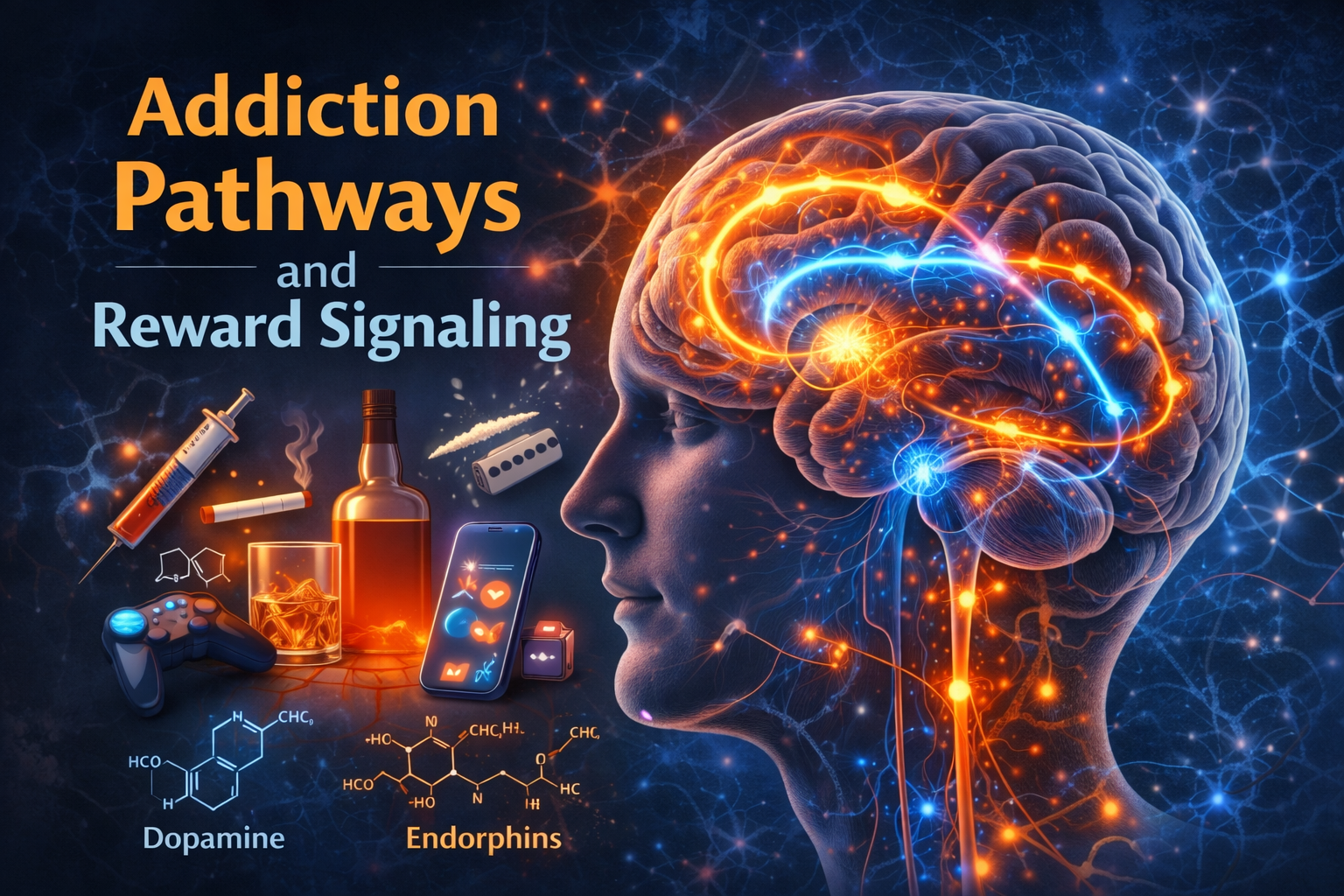
Addiction Pathways and Reward Signaling
GLP-1 receptors are present in brain regions associated with reward and reinforcement.
Research published in Cell Metabolism demonstrates GLP-1’s influence on neural reward circuits, suggesting potential implications for addictive behaviors.⁵
While still under investigation, early findings indicate possible reductions in alcohol and food cravings.
This area of research is evolving — but it expands the conversation beyond weight alone.
Inflammation and Systemic Health
GLP-1 therapies have demonstrated reductions in inflammatory markers and improvements in endothelial function, supporting cardiovascular and systemic health beyond glucose control.⁶
Chronic inflammation is a root contributor to metabolic disease, cardiovascular risk, and insulin resistance. Addressing inflammation at the signaling level may explain some of the broader benefits observed in clinical trials.

What About the Lawsuits?
Current litigation largely centers on allegations of inadequate disclosure of certain severe gastrointestinal side effects.
This is a transparency and regulatory issue — not evidence that GLP-1 therapies lack medical benefit.
Every effective pharmacologic therapy carries risk. Antibiotics, blood pressure medications, antidepressants — all involve risk-benefit analysis.
The appropriate medical question is not whether side effects exist.
It is whether benefits outweigh risks when used appropriately and with informed consent.
Nearly two decades of research support meaningful benefit in properly selected patients.

The Bigger Picture
GLP-1 receptor agonists represent one of the most significant metabolic advances of the past 20 years.
They are not magic.
They are not risk-free.
But they are evidence-based tools improving glycemic control, reducing cardiovascular events, supporting weight reduction, and influencing metabolic and inflammatory pathways.
Public discussion should reflect the totality of data — not isolated headlines.
Want to Better Understand Peptide Pathways?
GLP-1 is just one peptide involved in metabolic regulation. The body relies on multiple peptide signaling systems that influence appetite, inflammation, hormone balance, energy levels, and recovery.
Not everyone struggles with the same pathway.
Not everyone needs the same support.
If you’re unsure which biological systems may be influencing your symptoms or health goals, education is the first step.
That’s exactly why I created a quick 5-question peptide pathway quiz.
It’s designed to help you identify which metabolic patterns may be relevant to you — so you can better understand your biology before making any decisions.
This isn’t about guessing.
It’s about clarity.
Take the 5-question quiz and start learning how peptide pathways may connect to your metabolism, inflammation, and hormone balance — and then use that knowledge to have informed conversations with a qualified medical professional.
Because understanding your body changes everything.